On Waiting
...and what we notice along the way

It’s the first Tuesday after Easter as I write this, and I’m thinking about waiting. Catholics have spent 40 days prior waiting for the fulfilment of new life (and for Trinidadians, they have spent every day since Ash Wednesday waiting for next year’s Carnival!). In temperate climes, citizens await the emergence of buds green, yellow, red, purple and orange to dot trees, shrubs and the whole ground as the northern hemisphere turns to Spring. And today the world waited to see if an American President would hold true to his promise that “a whole civilization will die tonight” by 8 pm EST.
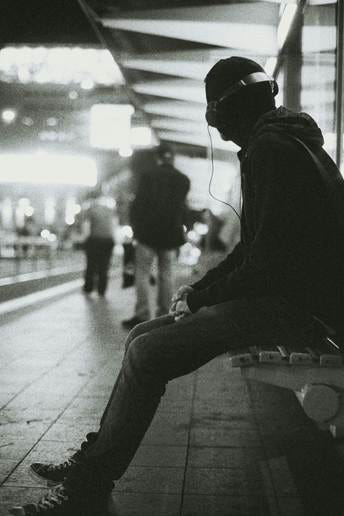
Photo by Max Wolfs on Unsplash
The experience and ritualization of waiting connects believers across the Abrahamic faiths – Judaism, Islam, and Christianity – as well as other faith traditions that practice meditation or fasting in some way. Holding vigil as so many of us do to honor loved ones we have lost, or as my mother does each night, staring out into the darkness as she awaits my sister’s safe return home from work, is not unique to people of faith either. In the service known as the Easter Vigil last Saturday night, I got to sing for and witness to a small congregation gathered to celebrate new life in baptism and confirmation. But three hours later, and fighting off the remnants of a cold, I was certainly waiting, too, to go home to celebrate with a lazy Easter on the couch. New Yorkers and those in locales where “the new” is constantly celebrated and visible seem to enjoy waiting too, even in Big Dumb Lines for the latest taco, pizza, or a very special windbreaker.
Maybe the faithful of all stripes are onto something when they valorize waiting, whether in holy texts or outside of Supreme stores. In waiting, we slow down enough to pay attention to our immediate experience of an unfolding process. Most of the time, waiting can feel viscerally painful. Many of us have recently felt frustration in long TSA lines, with our joy postponed and our vacation destination seeming farther and farther away with each ticking second as our feet warm the same spot in the terrazzo floor. Outside the airport, we might want to renew our driver’s license or grab a half pound of sliced turkey but find ourselves holding ticket #99 when #37 is just getting called. Frustration understandably emerges from a sense of distance from a valued goal or outcome. But waiting – and doing it for long enough, under the right conditions – can help us reframe how we think about those distant outcomes and recognize what’s worthwhile in the here and now.
Waiting helps us sit in and appreciate process, helping us to take a more appreciative, less anxious perspective on far-off outcomes. A correlate of this in my field can be found in what we call practice theory or simple “practices.” The idea is that, historically, much of organizational studies has focused on “performance” in terms of outcomes like number of widgets made, budget, schedule, quality, satisfaction and lots of other things that are really important. While we can count or measure these things, we can’t really understand much about them without appreciating the processes that produce and affect them. A “practice” perspective says that much of these “hard” outcomes are actually comprised of patterns of behaviors unfolding and adapting over time among participants. Not just single behaviors at certain points in time, executed by some powerful person somewhere. Instead, the world can be understood in terms of interweaving, pulsating threads of speaking, doing, and feeling that form patterns that further shape what we say, do and feel. Moreover, like religion (whether organized or of Supreme merch) practice is social. The patterns of how we line up and interact in a TSA line are shaped by others and we, by falling into line or not, reinforce the pattern or force it to adjust. The same goes for our workplaces and how we effectively accomplish all the “strategic” goals and outcomes we read about in the news. It takes all of us, and what we say and do in patterned ways, to make the world go round. Waiting helps us slow down enough to zoom in on those patterns and, perhaps, sometimes, ask…”What are we doing? What am I doing? Why?”
Focusing on practice has helped me appreciate waiting. Viewing change in any organization, group, or person in terms of practices and patterns has helped me be more patient with myself and others. Patterns aren’t easily broken. Who we are right now – whether as people or as organizations - is an instantiation of years of doing, saying, thinking and feeling in ways that served us at some point. Taking on the weighty task of “being” or “doing” things differently is often fraught with resistance, disappointment and frustration. A little forgiveness, grace and self-compassion can be easier to come by if you take the weight of the past into account. Armed with that grace, you can then start to appreciate that the same holds true for the future. If it is to be different, then it has to begin with small actions that we commit to, actions that slowly shift the patterning we have carefully (or not so carefully) built up over time. Waiting reminds us that we got here over time and will get “there,” wherever that is, over time and in time.
Final, final thought: What we wait on matters. After drafting some of this earlier in the day, I got into my car and heard newscasters waiting and waiting, narrating the minutes and hours until 8 p.m. EST to see if catastrophic devastation would be wrought by this country, or not. Just another Tuesday evening in 2026. Waiting by my news feed felt counterproductive and hopeless. As an ineffective salve, I called my Senator, Jon Husted’s, office and left a message imploring him to do something, anything. I believe that we need to remain aware of the world at large. Growing up on a small island demands that of you. Knowing about the possibility of things like wars, cruelty, violence and injustice, working to prevent it, and stepping up in the aftermath, certainly matters. But, from one Tuesday to the next, I’m waiting on the things in my immediate control – how I treat others, how I respond to challenges and unfairness in my work and neighborhood. I’m focused on changing the patterns and practices in front of me, mindful that, over time, the effects ripple beyond what we can see here and now.

Photo by David Taffet on Unsplash